

Most business owners are familiar with annual accounts. They are produced once a year, submitted to Companies House & HMRC, filed away and that’s the job done.
But for many business owners, that one annual snapshot is all they have to work with when making decisions. And the problem with that is it can be twelve months out of date by the time it lands in front of you. Management accounts change that completely.
What are management accounts?
Management accounts are regular financial reports produced for a business owner or business management team, rather than for HMRC or Companies House.
They are typically prepared monthly or quarterly and are designed to give a clear, up-to-date picture of how the business is performing right now. Unlike annual accounts, which look backwards, management accounts are built to look forwards.
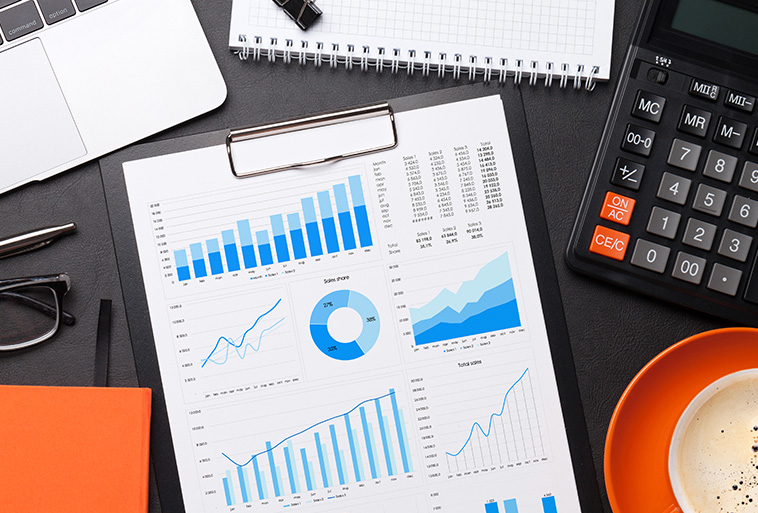
Think of them as a financial dashboard for the business. The kind of information that helps make real decisions, rather than find out what happened twelve months ago.
Why annual accounts aren’t enough
Annual accounts serve an important purpose. They keep a business compliant, satisfy legal obligations and provide an official record of the business performance. But they were not designed to help run a business day to day.
Here is the issue. By the time year-end accounts are prepared and signed off, the financial period they cover could be well over a year ago. A lot can change in that time such as costs go up and revenue shifts, a particular product line or service starts underperforming or a new opportunity opens up.
Without regular financial information, making decisions are based on instinct rather than evidence. While instinct has its place, it is no substitute for knowing what the business numbers say right now. Annual accounts also tend to be focused on compliance rather than insight. They tell what has happened, but they do not always explain why, or what you should do about it. Management accounts fill that gap.
What management accounts include
Every business is different and management accounts can be tailored to reflect what matters most, however most sets of management accounts will include a combination of the following.
Profit and loss – A profit and loss report shows income, costs and what is left over. Updated regularly, it gives a running view of whether the business is making money, which months are stronger than others and where margins may be tightening.
Cashflow – Cashflow and profit are not the same thing, and this is a distinction that catches a lot of business owners out. A business can be profitable on paper while still struggling with cash.
A cashflow statement shows the actual movement of money in and out of the business. It highlights whether there is enough cash to meet upcoming commitments, pay wages, cover a tax bill or invest in something new. Monitoring cashflow regularly is one of the most important habits a growing business can develop.
KPIs – Key performance indicators are the metrics that matter most to a specific business. These might include things like:
- Revenue per month or quarter
- Gross margin percentage
- Debtor days (how long customers are taking to pay)
- Overhead as a percentage of turnover
- Sales conversion rates
The right KPIs depend on the industry and the stage the business is at but having them tracked and reviewed regularly means trends can be spotted early rather than only noticing a problem when it has already had an impact.
How they help business owners make better decisions
The real value of management accounts is not the numbers themselves. It is what they allow you to do with them. When a business has regular, accurate financial information in front of them, decisions become clearer.
Pricing decisions – if gross margin is shrinking month on month, that tells something important about whether the pricing is keeping pace with the costs. Without management accounts, a business might not notice until the end of the year.
Hiring decisions – when thinking about taking on a new member of staff, regular cashflow and profit visibility makes it far easier to judge whether the timing is right and what the business can sustain.
Investment decisions – whether it is new equipment, a new system or a new marketing push, management accounts give the confidence to know whether the numbers support the investment, rather than just hoping they do.
Spotting problems early – One of the biggest advantages of regular financial reporting is that it gives a business time to react. A dip in revenue or a rise in costs shows up quickly and there is still plenty of time to do something about it.
Planning ahead – management accounts work hand in hand with budgets and forecasts. When comparing actual performance against what was expected, planning becomes far more grounded.
For many business owners, the shift from once-a-year accounts to regular management information is genuinely transformational. Not because the numbers are magic, but because knowledge is power. Running a business without up-to-date financial information is a bit like driving with a blacked-out windscreen. You might get where you are going, but the risks are much higher than they need to be.
If management accounts are something you would like to explore, we would love to help. Give us a call on 01173 700 079 or drop us an email at hello@steppingstonesaccountancy.co.uk and we can talk through what would work best for your business.